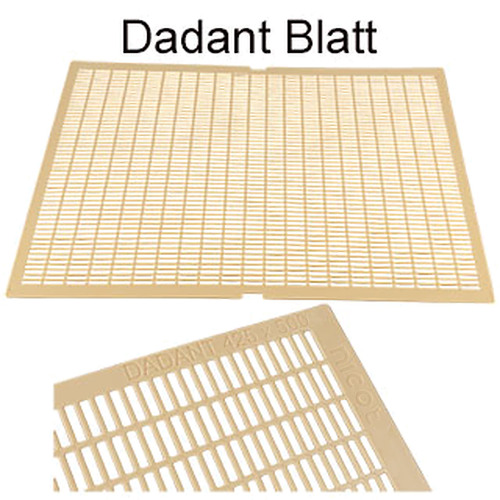
Frequently asked questions about queen excluders Plastic: What is a queen excluder Queen?
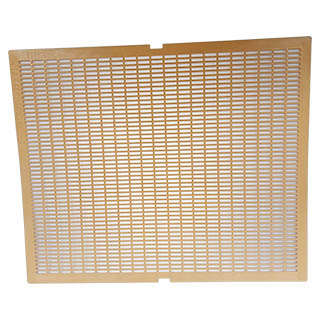
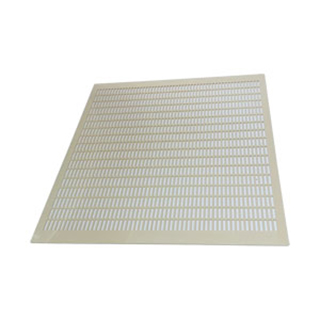
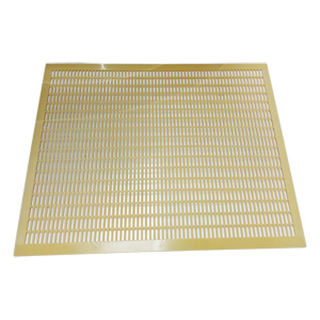
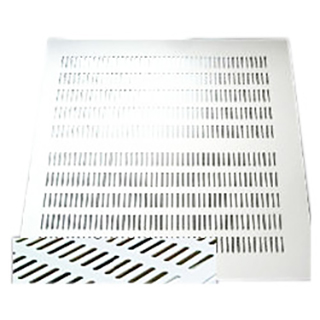
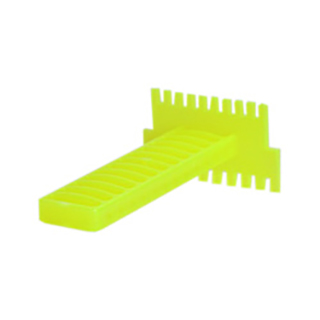
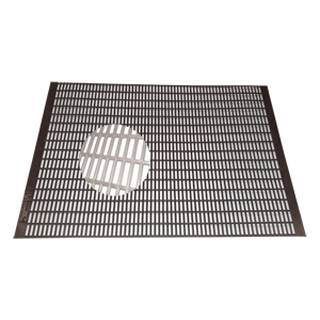
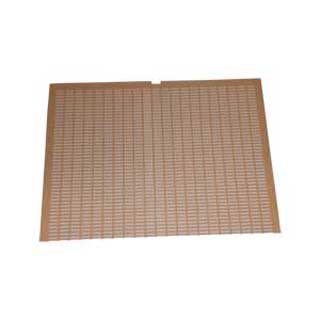
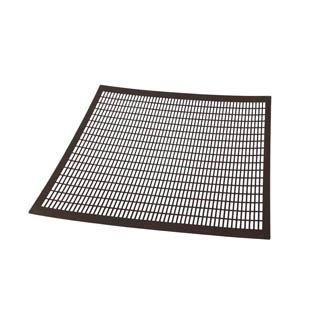
The queen excluder is an element placed between the brood box and the supers honey supers for prevent the Queen's passage and the drones, allowing only the transit of the worker bees. In this way, the queen is prevented from laying eggs in the frames intended for the honey.
Why are plastic queen excluders used?
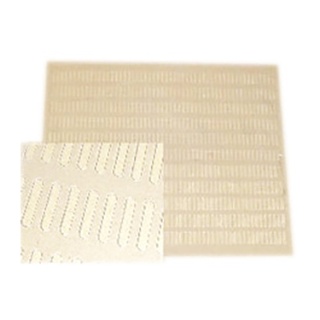
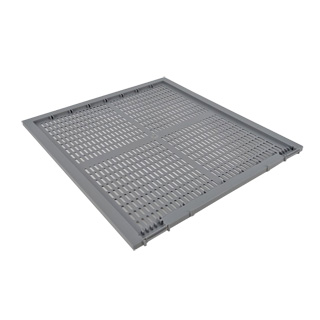
Plastics are an economical, lightweight and easy to clean option. Their flexibility allows them to be adapted to different models of hive and manipulate them without risk of breakage or corrosion.
What is the difference between a plastic grid and a metal?
- Plastic: lighter, more economical and flexible; ideal for hives with frequent maintenance.
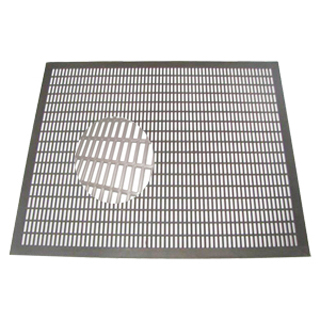
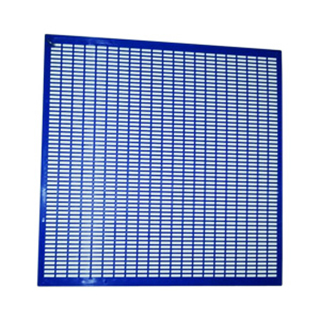
- Metallic: more durable and heat resistant, but also heavier and more expensive.
In beekeeping professional metals are usually used; in amateur or general use, plastic ones are more practical.
Does the grid affect the passage of bees?
No, if the grid is the correct slot size (approx. 4.2 mm), the workers go through it without difficulty. However, if you are dirty or misplaced, it can make it difficult to pass and reduce activity in supers.
Where is the queen excluder?
It is situated just between the brood box and the first super honey super. This prevents the queen from going up to lay eggs in the frames of honey, keeping the supers clean and ready for extraction.
When should the grid be placed or removed?
- Place: when the colony is strong and begins to fill the brood box (spring).
- Remove: after the harvest of honey, before winter, so that the queen can move freely by the hive.
How do I clean a plastic grid?
Can be easily cleaned with hot water and a brush to remove residues of propolis or wax. In case of a lot of dirt, it can be left a few minutes in warm water with neutral soap, always avoiding abrasive products or solvents.
Do plastic queen excluders deform with heat?
Only if exposed to direct high temperatures (more than 70 °C). Under normal conditions of use within the hive, they maintain their shape perfectly. It is important not to place them under the sun or next to heat sources when storing them.
What grid size fits my hive?
The most common are compatible with hives Langstroth, Dadant or Layens. Before buying, check the external measurements of your hive body: the grid must cover the entire frame without leaving gaps.
What are the advantages of flexible versus rigid grids?
The flexible They adapt better and are easier to remove, while rigid They better maintain their shape by manipulating them frequently. The choice depends on the type of handling and how often the hives are reviewed.